
BMU Online · Knowledge Centre
Trends
Expert perspectives on MBA programmes, online education, career growth, and industry trends — written by faculty and practitioners.
178 articles
 Comparison
Integrated MBA vs Regular MBA: Key Differences, Eligibility & Better ROI 2026
Deciding between a 5-year Integrated MBA right after Class 12 and a traditional 2-year Regular MBA post-graduation is a crucial career crossroads. An Integrated MBA (like the IPM at premier IIMs) locks in a master’s degree early, saving candidates from the high-stakes CAT competition later. Conversely, a Regular MBA allows students to build baseline domain expertise in engineering, commerce, or…
 Courses
MBA After Engineering: Benefits, Specializations, and Career Outlook 2026
Aspiring to an MBA in India after completing an engineering degree for the 2026 academic year requires a Bachelor’s degree from a University Grants Commission (UGC) recognised institution, typically with a minimum of 50% marks for eligibility. This prerequisite, established by individual management institutes, governs entry into MBA programs, which generally cost between INR 4 and 15 lakhs. While an…
 Courses
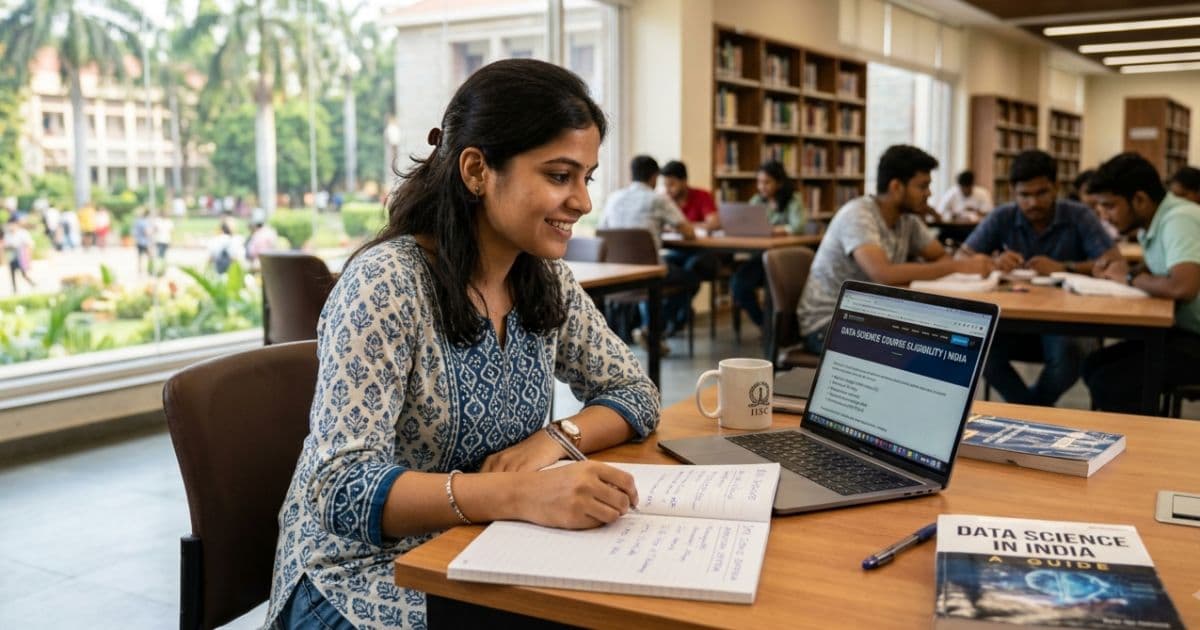
Data Science Course Eligibility Criteria in India: 2026 Requirements Explained
Data Science remains one of the highest-demand career pathways in India for 2026. While traditional B.Tech programs in Data Science and AI strictly require a Science background with Mathematics and entrance scores like JEE or BITSAT, modern B.Sc, BCA, and flexible online degrees welcome students from Commerce and Arts streams. From premier institutions like the IITs, NITs, and Delhi University…
 Courses
MBA After BCOM in 2026: Eligibility, Scope, and Career Growth
Securing an MBA after a BCom in 2026 hinges on meeting specific criteria set by individual Indian institutes, with most mandating a Bachelor’s degree from a recognised university with a minimum of 50% marks. For example, SJMSOM, IIT Bombay, requires Indian candidates to achieve at least 60% marks (55% for SC/ST/PWD) or a CPI of 6.5 (6 for SC/ST/PWD) out…
 Comparison
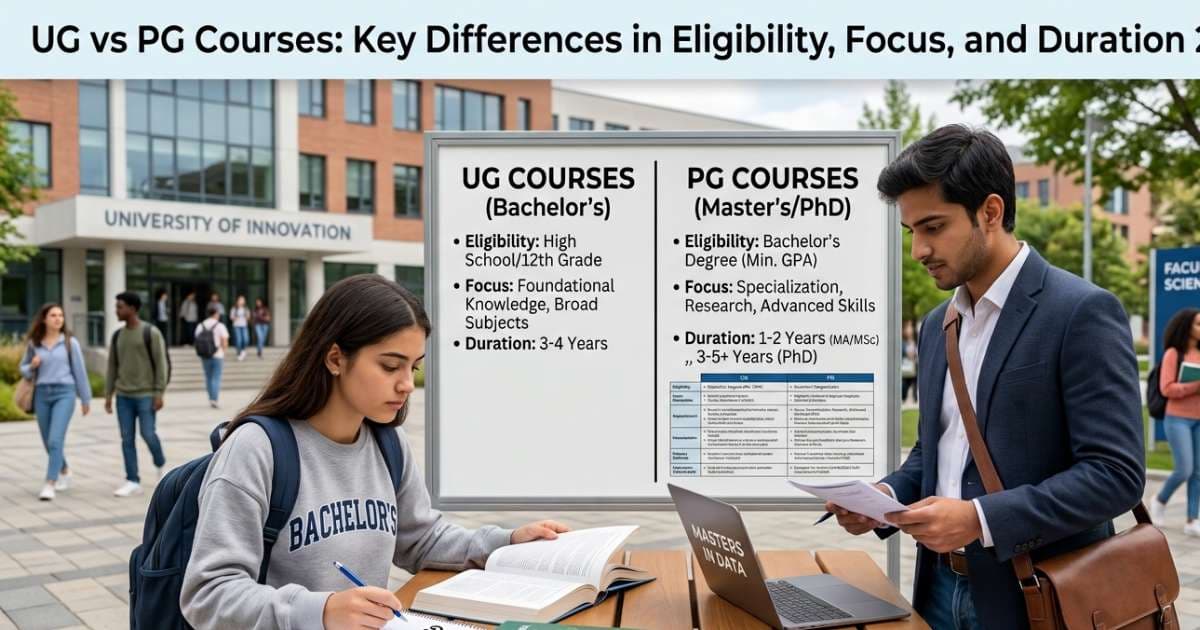
UG vs PG Courses: Key Differences in Eligibility, Focus, and Duration 2026
A postgraduate degree significantly enhances career growth and earning potential in India, with Korn Ferry Hay Group research indicating a typical starting salary of ₹4.5 lakh for master’s degree holders. This represents a 30–50% higher starting salary advantage for PG qualifications in high-demand sectors like finance, analytics, and technology compared to those with only an undergraduate degree. This critical distinction…
 Courses
Top IT Courses After 12th in 2026: High-Paying Careers & Eligibility
India’s IT sector is expanding rapidly in 2026, driven by over 1,600 Global Capability Centers and a 51% deficit in specialized tech talent. Selecting the right IT degree right after Class 12 is the most effective way to build a future-proof, high-paying career. Specialized undergraduate programs in Artificial Intelligence, Data Analytics, Cybersecurity, and Cloud Computing offer freshers competitive starting packages…
 Specialization
Best Courses After Diploma: Top Career Paths & Degree Options 2026
Students can shorten their degree duration to three years by transitioning from a diploma to a degree program, a process often termed “lateral entry” or a “diploma to degree bridge course.” This pathway, governed by the All India Council for Technical Education (AICTE), permits institutions to admit 10–20% of students over and above their regular sanctioned intake directly into the…
 Specialization
BSc Course Duration 2026: Typical 3-Year & 4-Year Program Lengths
In India, a Bachelor of Science (BSc) typically spans three years, structured into six semesters under individual university frameworks guided by the Ministry of Education. While this conventional BSc course duration is three years, a B.Sc. (Honours) program may extend to a three- to four-year undergraduate programme, adding an additional year.
 Specialization
Top 10 Commerce Without Maths Career Options & Courses 2026
Commerce stands as India’s leading undergraduate discipline, enrolling 44.08 lakh students and accounting for 13.3% of total UG enrolment nationwide, according to data from the Ministry of Education’s All India Survey of Higher Education (AISHE). This substantial student population, encompassing those pursuing Commerce without Mathematics, navigates career paths significantly influenced by individual university admission policies and the dynamic requirements of…
 Specialization
Top Business Management Courses After 12th in India 2026
Selecting the right business management course after 12th is a strategic gateway to a high-growth corporate career. Open to students across Science, Commerce, and Arts streams, undergraduate programs like BBA, BMS, and BBM equip aspirants with core leadership, analytical, and operational skills. With top institutions mandating 50–60% aggregate marks in Class 12, admissions are processed through merit or national entrance…
BML Munjal University
Ready to Start Your MBA Journey?
UGC-recognised online MBA programmes with industry-aligned curriculum, expert faculty, and placement support.