
BMU Online · Knowledge Centre
Comparison
Expert perspectives on MBA programmes, online education, career growth, and industry trends — written by faculty and practitioners.
11 articles
 Comparison
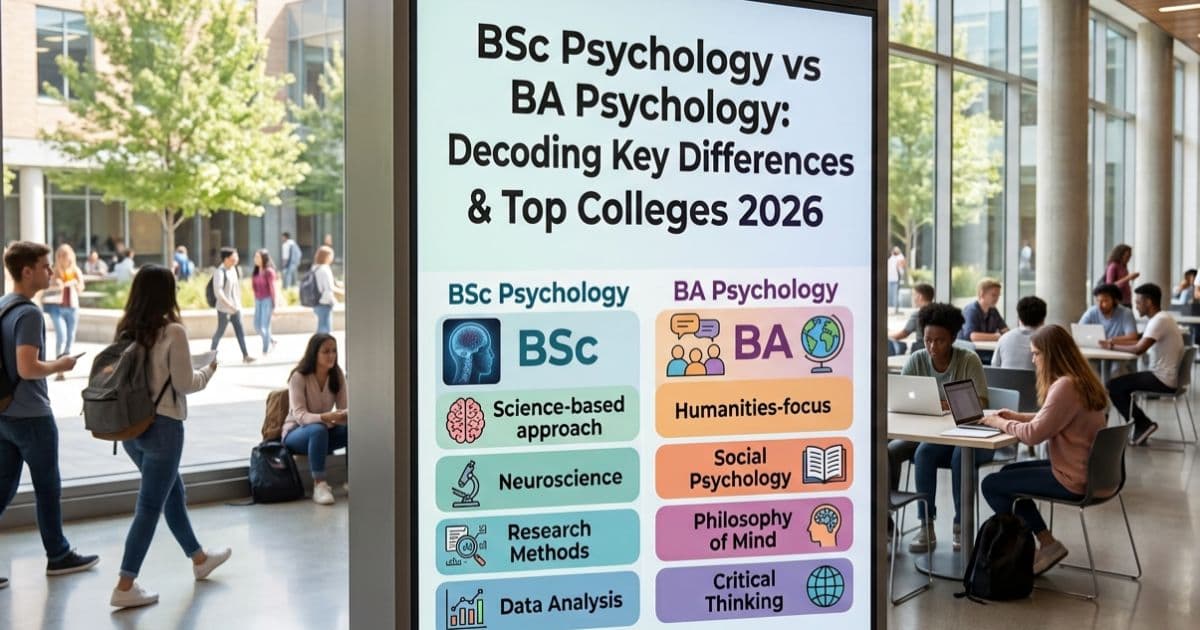
BSc Psychology vs BA Psychology: Decoding Key Differences & Top Colleges 2026
Prospective students must understand the fundamental distinctions between a BSc Psychology and a BA Psychology degree, as universities directly govern the curriculum and specializations offered for each. While both undergraduate programs provide foundational knowledge in human behavior, a BSc Psychology typically emphasizes scientific methodology, statistics, and neurobiological aspects, making it ideal for careers in clinical, neuroscience, and research. Conversely, a…
 Comparison
Amity vs Chandigarh University Online MBA Comparison 2026: Fees, Placements, Rankings
Choosing between Amity University Online and Chandigarh University (CU) Online for an MBA in 2026 comes down to balancing cost, global recognition, and career acceleration. Both hold prestigious NAAC A+ accreditation and UGC-DEB entitlement, guaranteeing that their online degrees carry full legal parity with traditional on-campus MBAs. However, while Amity excels with global accreditations, extensive specialization options, and an AI-powered…
 Comparison
MBA Marketing vs MBA HR: Salary, Scope, and Career Prospects 2026
Understanding the Common Management Admission Test (CMAT) is crucial for MBA aspirants, as the National Testing Agency (NTA) oversees this national-level entrance examination. While the NTA governs the CMAT, individual universities and management institutes independently establish their specific admission criteria and specialisation offerings, such as MBA Marketing vs MBA HR. Entry-level salaries (0-2 years) for MBA graduates demonstrate significant variance:…
 Comparison
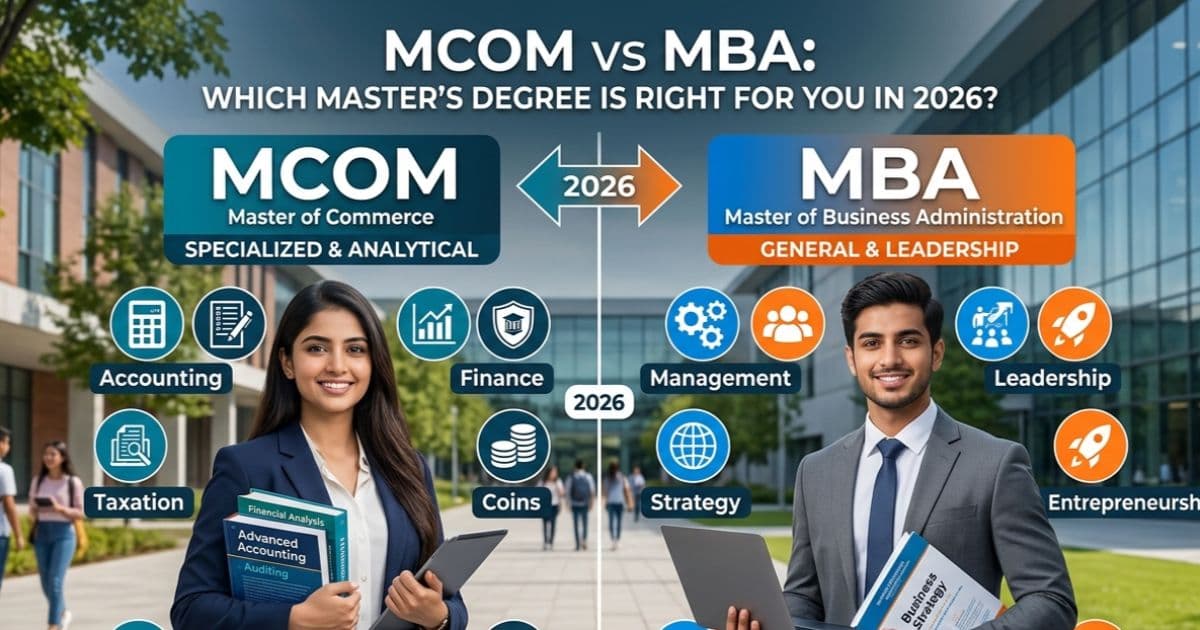
MCOM vs MBA: Which Master’s Degree Is Right for You in 2026?
Choosing between a Master of Commerce (M.Com) and a Master of Business Administration (MBA) in 2026 is one of the most pivotal decisions for postgraduate aspirants. While both degrees elevate your corporate standing, their core philosophies, costs, and career outcomes diverge significantly. An M.Com offers deep technical expertise in specialized domains like financial accounting, auditing, corporate taxation, and academic research…
 Comparison
BCOM vs BCOM Honours: Key Differences, Benefits, and Career Paths 2026
Navigating undergraduate commerce options has taken on a new dimension under India’s National Education Policy (NEP) 2020. The traditional debate between a general Bachelor of Commerce (B.Com) and a Bachelor of Commerce with Honours (B.Com Hons) now involves multi-exit entry points, flexible credit transfer, and the Four-Year Undergraduate Programme (FYUP) framework. While both degrees build foundational business acumen, they serve…
 Comparison
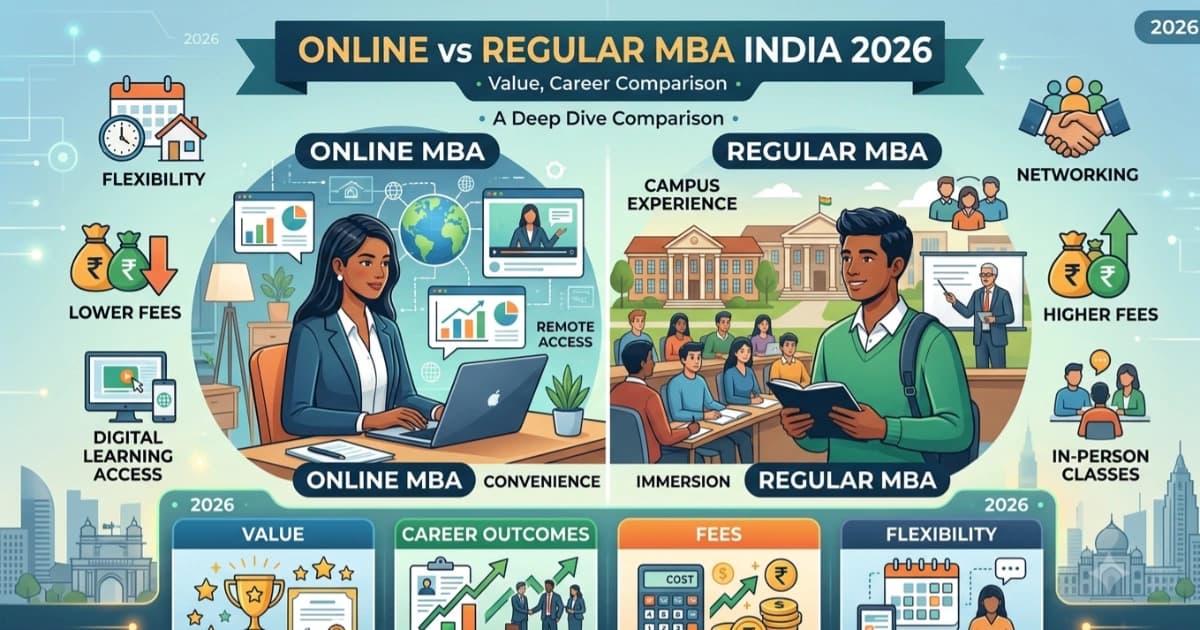
Online vs Regular MBA India 2026: Value, Career Outcomes, Fees & Flexibility
Deciding between an Online MBA and a full-time Regular MBA in India comes down to one core trade-off: workplace mobility and continuous earnings versus immersive campus recruitment. While traditional two-year residential programs unlock direct access to corporate placement pipelines at fees ranging from ₹8 Lakhs to ₹25+ Lakhs, UGC-DEB-approved online programs allow working professionals to earn a recognized degree for…
 Comparison
Integrated MBA vs Regular MBA: Key Differences, Eligibility & Better ROI 2026
Deciding between a 5-year Integrated MBA right after Class 12 and a traditional 2-year Regular MBA post-graduation is a crucial career crossroads. An Integrated MBA (like the IPM at premier IIMs) locks in a master’s degree early, saving candidates from the high-stakes CAT competition later. Conversely, a Regular MBA allows students to build baseline domain expertise in engineering, commerce, or…
 Comparison
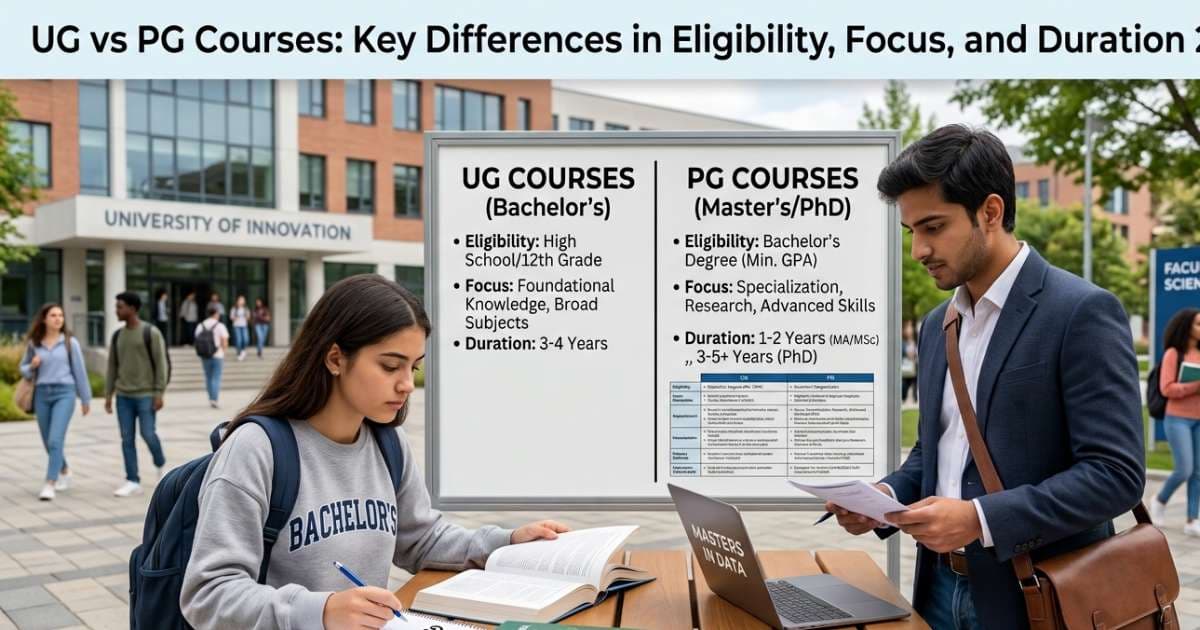
UG vs PG Courses: Key Differences in Eligibility, Focus, and Duration 2026
A postgraduate degree significantly enhances career growth and earning potential in India, with Korn Ferry Hay Group research indicating a typical starting salary of ₹4.5 lakh for master’s degree holders. This represents a 30–50% higher starting salary advantage for PG qualifications in high-demand sectors like finance, analytics, and technology compared to those with only an undergraduate degree. This critical distinction…
 Comparison
BBA vs BCA: Choosing the Right Career Path After 12th in 2026
Indian universities and recognized boards establish the academic eligibility criteria for undergraduate degrees, with candidates typically needing a minimum of 50% marks in Class 12 to qualify for either a Bachelor of Business Administration (BBA) or Bachelor of Computer Applications (BCA) in 2026. This foundational requirement determines a student’s initial path when choosing between BBA vs BCA after 12th. Leading…
 Comparison
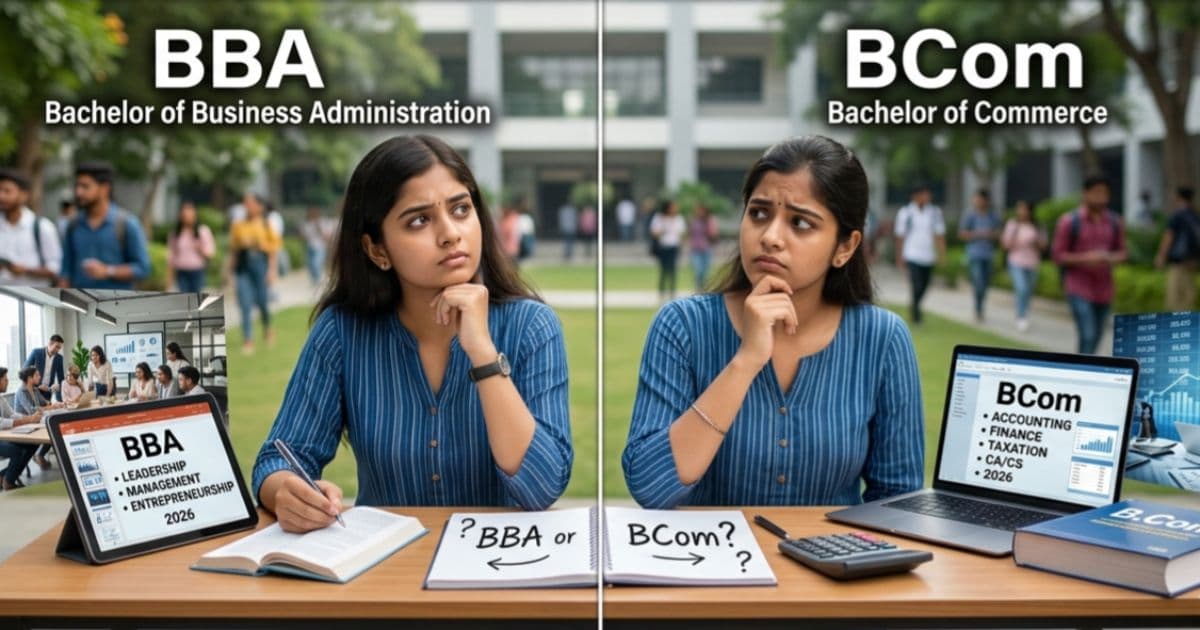
BBA vs BCOM: Choosing the Best Business Degree After 12th in 2026
For students considering undergraduate business degrees for 2026, the admission process for Bachelor of Business Administration (BBA) and Bachelor of Commerce (BCom) programs is governed by individual university administrations. These institutions define eligibility, typically requiring a minimum of 50% marks in 10+2 from any stream for both BBA vs BCom, though specific specialisations like JGBS BBA (Hons.) Business Analytics for…
BML Munjal University
Ready to Start Your MBA Journey?
UGC-recognised online MBA programmes with industry-aligned curriculum, expert faculty, and placement support.